
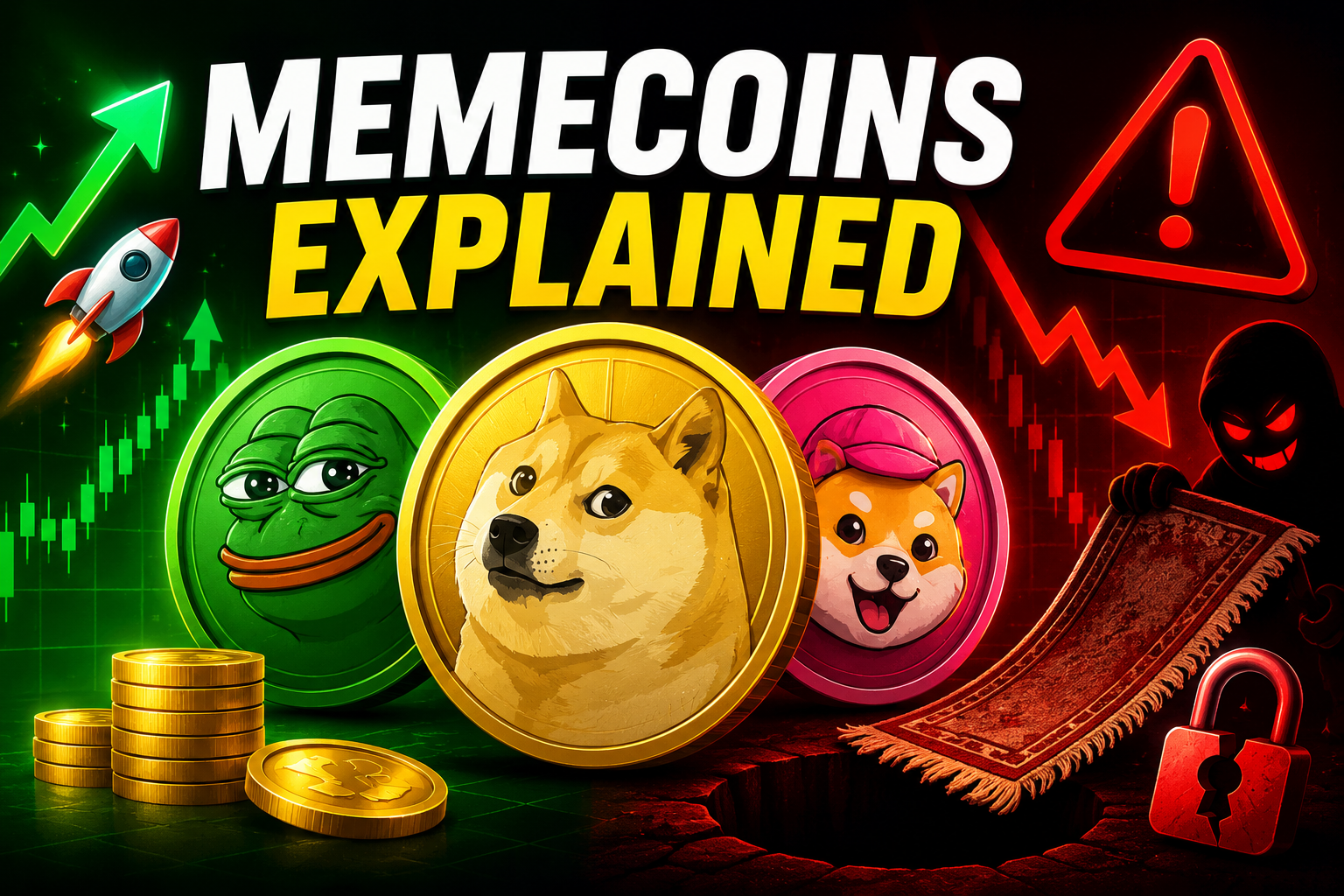
Memecoins explained: how they work and their risks
What memecoins are, why people buy them, and the risks you must know (volatility, rug pulls, pump and dump) before getting close to them.
A coin inspired by a dog is worth billions. Another, created in five minutes as a joke, makes (and loses) fortunes in hours. Welcome to the wild world of memecoins. We'll explain what they are, why they exist, and above all, the risks you must know before getting close.
If you're new to crypto, start with our beginner's guide.
Important disclaimer: memecoins are among the riskiest assets that exist. This content is educational, not financial advice. You can lose all your money.
What a memecoin is
A memecoin is a cryptocurrency born from a meme, a joke, or an internet community, rather than from a project with technical utility. Its value doesn't come from what it "does" (usually nothing), but from the attention, community, and speculation surrounding it.
There are famous ones that have been around for years, and thousands that appear and disappear in days. On platforms like pump.fun (on the Solana network), anyone can launch one in seconds, which has caused an explosion of new coins... and of scams.
Why people buy them
- The dream of striking it rich: stories of people who turned a little money into a lot generate FOMO.
- The community: belonging to a group with its own "coin" and culture.
- The thrill: it's largely pure speculation and adrenaline.
It's important to be honest: for most people, memecoins work more like a bet than an investment.
The risks (read them twice)
Extreme volatility
A memecoin can rise 500% and crash 90% on the same day. It's not an exaggeration: it's the norm. Those who buy at the top out of FOMO are usually the ones who lose.
Rug pulls
The most feared risk: the creators pump the coin, attract buyers, and then pull all the liquidity at once, leaving the token worthless and keeping the money. That's why understanding liquidity is key; we explain it in our guide on how to add liquidity to a token.
Concentration in few hands
If a few wallets hold most of the coin, they can crash the price by selling whenever they want. There are tools to check this distribution before getting in.
Manipulation and "pump and dump"
Coordinated groups inflate the price to sell at the top to latecomers. Whoever isn't in the group is usually the one who pays for the party.
If you still want to explore them, do it smartly
- Only money you can lose 100%: treat it like the cost of a movie ticket, not as savings.
- Research the distribution and liquidity before buying.
- Distrust the rush and groups that promise gains.
- Have an exit strategy: decide in advance when you'd get out, whether winning or losing.
- Use a secondary wallet and protect your security (guide here).
The useful side: understanding how they work under the hood
Beyond speculation, understanding how a token is created and given value is a fascinating lesson in how blockchains work. If your curiosity is piqued from the technical and educational side, we have a guide to creating your own cryptocurrency on Polygon without coding.
Conclusion
Memecoins are the most speculative and risky face of cryptocurrencies. They can be a fascinating cultural phenomenon to observe, but as an "investment" they're one of the fastest ways to lose money if you go in blind. If you approach them, do it with knowledge, with money you can afford to lose, and without believing the promises of easy wealth.
At MAGUITECH we bet on understanding technology, not chasing quick wins. If you want honest training on blockchain and Web3, let's talk.
Did you find this article useful?
Talk to MAGUITECH